
Welcome
Hi, I'm Andreas Gohr and splitbrain.org is my website. I'm a web developer and maker living in Berlin, Germany. If you're new here, feel free to check out the blog posts and links below.
If you like what you see, you can subscribe to the RSS feeds for the Blog Posts and Links.
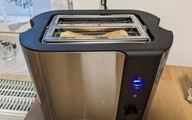
Finding the Best Toaster Toast has been mentioned in this blog surprisingly often. I like toast, so when, after 8 years, my current Toaster started to misbehave I needed a replacement. This turned out more difficult than you'd think. My old toaster was a Russell Hobbs… ▶

Love Letter to my Dog It's exactly one year since Kaddi and I drove to the shelter and picked up Tarly the dog. One year of daily walks. One year of feeding, grooming and petting. One year of setting rules and boundaries and sometimes letting them slide. One year of growing closer and more comfortable with each other. One year of falling in love.… ▶
- DKIM-Konfiguration für Postfix
- boardgame.io - Open-Source Game Engine for Turn-Based Games
- Boardzilla — A boardgame development framework

MICO Toastie About 8 years ago I blogged about Toastabags - simple bags that allow you to make grilled cheese sandwiches in a Toaster. I still love them, I still use them. But recently I stumbled about a thing in this YouTube video: Ashens and Barry are using a… ▶
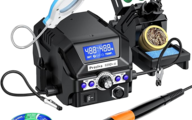
Soldering Station Box For decades I used a very cheap soldering iron without any temperature control. When it was time to replace it, I went for a TS80 - a tiny soldering iron powered by USB-C. It was great, but the display died after just a few uses. So I replaced it with a… ▶
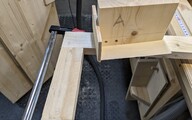
End of Year Wood Working The year is nearly over, time to quickly post about the three last wood working projects. The first was some firewood shelves. Since we had felled a tree in October and we had also ordered some commercial firewood, a proper storage solution was needed.… ▶
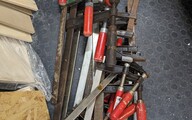
Clamps! It's a well known fact in wood working that you can never have enough clamps. But clamps are expensive. So when I ran out again during a recent project, I decided to browse the local classifieds to see if there might be a good deal to be had.… ▶
- Recommendations for settings for Overture TPU using M3S+
- Github repo Raphire/Win11Debloat
- Question: openapi: how to define positional arguments in POST body?
- Question: How to define positional arguments in OpenAPI for POST body?
- Nick Cave on ChatGPT (read by Stephen Fry)
- Richard Stallman's political discourse on sex
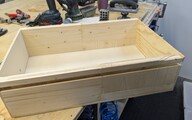
Scrapwood Drawers As I mentioned in other posts, the shelf solution I build in 2016 is part of my workshop and still holds a whole bunch of stuff besides also housing my drill press and band saw. However I'm not so happy with the Trofast boxes anymore for several reasons: * They're not the most effective use of the available space… ▶
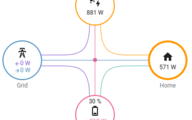
Growatt & Home Assistant My solar installation uses a Growatt SPH 8000 inverter and of course I wanted the data it provides (produced, used, stored energy etc) in Home Assistant. That was relatively easy using the the Growatt integration available. This integration was… ▶
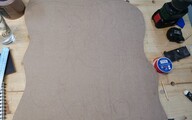
Tonie Unicorn Shelf A few weeks ago, Kaddi and I finished building a Tonie shelf. Tonies? So, what are Tonies? If you're around my age you probably grew up with a cassette player and various children's tapes. They were relatively cheap and kept the kids occupied for an hour or so. Even young children quickly learned how to use cassette tapes and players.… ▶
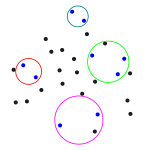
Using SQLite as Vector Store in PHP At work, I'm working on a plugin for DokuWiki that uses OpenAI's ChatGPT to answer questions by referencing the wiki pages. The basic principle is described in this forum post: Experimental Plugin: AIChat - chat with your wiki pages using ChatGPT. Basically, get embedding vectors for all your page data, use those to find the data that is semantically most similar to the asked question and use that as a context for ChatGPT.… ▶
Older Posts are available in the Blog Archive. Keep up to date with the RSS Feed.