
Old Game, New Clothes
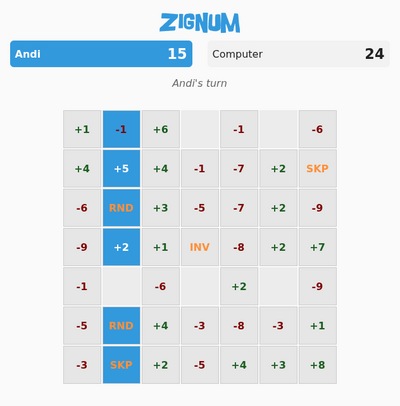
Back in university in 2003 we had to do a group project. I don't remember which course it was, but the assignment was pretty open. Basically as long as you coded something, you passed.
I had just switched from my trusty Palm Tungsten E2 PDA to a Linux based Sharp Zaurus and I was missing a little puzzle game I enjoyed playing on the Palm. So my friend Frank and I decided to implement our own version.
The Zaurus used QT as the graphics framework so we made it in C++ and QT. It was a fun project and it not only worked on the Zaurus but also on desktop. Frank even managed to compile it for Windows.
The time of PDAs was soon over and the age of the smartphone had begun. From time to time I thought about creating an Android app of that game. Unfortunately I had lost the original source code, so I asked Frank if he still had it and luckily he found it on an old disk.
Good thing he sent the code to my gmail account where it got archived forever. Because that was back in 2011 and I never came around to actually make that app.
But recently I remembered. And since we're living in the future (a much shittier version of the future than I had hoped, but the future nonetheless) porting code is relatively simple now.
So I spent an afternoon with Claude Code, having it analyze the original code, come up with some initial requirements and a final implementation plan. Then I let it run and it basically one-shot a working implementation  .
.
There are many valid criticisms on LLMs and their billionaire owners. But that LLMs don't work isn't one of them…
I iterated a bit on the implementation and now have a modern version of the old game and it even includes a network mode.
The game uses modern ES6 JavaScript modules and web components, the networking is based on WebRTC (using PeerJS), it has an automatic dark mode, you can install it as an offline app thanks to PWA technology and does not even need a build system. Another tiny part of the future that doesn't suck.
If you want to give it a try, here you go: ZigNum. I find the computer quite difficult to beat – despite the rather naive “AI” approach we picked back in 2003. But maybe I'm just rusty.